Promoting Adolescent SRH Through Participatory Community Engagement
(PASPCE)

Year of Implementation: 2019
Background
In Ghana, entrenched socio-cultural norms continue to hinder girls’ empowerment, confining them to domestic roles while limiting access to economic opportunities. Traditional gender roles perpetuate cycles of poverty and vulnerability, with 23% of girls married before 18 and 14% becoming mothers by 19 (GSS 2021). Recognizing this systemic challenge, UNICEF and KOICA launched the ‘Better Life for Girls’ program to transform gender norms through skills development and community engagement. Savana Signatures implemented this initiative across 80 communities, targeting the root causes of gender inequality by addressing both economic barriers and harmful cultural practices that restrict girls’ potential.
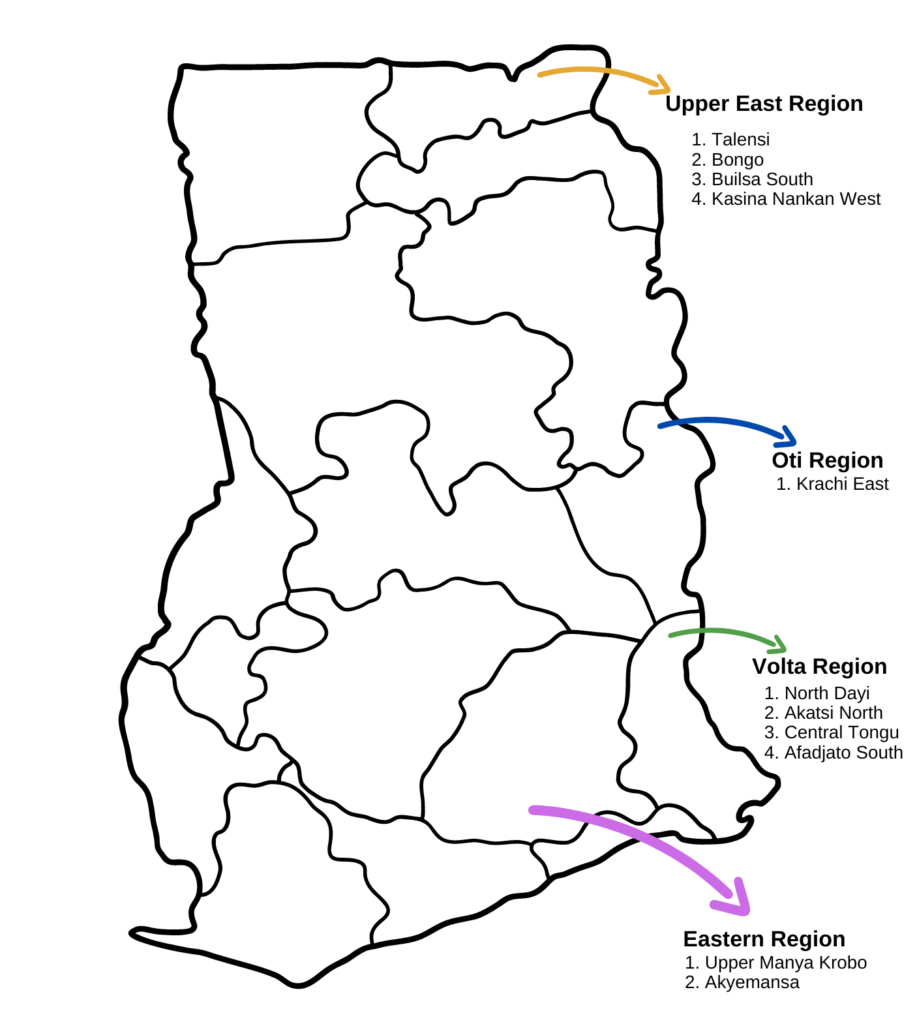
The project is being implemented in 17 districts across five regions.
Strategy
The PASPCE project adopted a dual approach combining institutional strengthening with direct community engagement and advocacy. Savana Signatures worked closely with health promotion units in 17 district health directorates to facilitate dialogues between adolescents and community leaders. The implementation strategy focused on three key pillars:
- School and community mass engagements created platforms for intergenerational dialogue about adolescent SRH needs.
- The project simultaneously built youth capacity through empowerment programs that equipped adolescents to advocate for their health rights.
- Digital access points were strengthened through promotion of the AGOOSHE+ Helpline as a confidential information and referral service.
Key Highlights
- Provided weekly SRH information and referrals to 120 adolescents through the AGOOSHE+ Helpline
- Enhanced SRH knowledge among 30,000 students across 50 primary, JHS, and SHS schools
- Trained and engaged 210 community gatekeepers (traditional/religious leaders) as adolescent SRH allies
- Established sustainable school-community partnerships for ongoing SRH education
- Documented measurable improvements in health-seeking behaviors among target populations
- Created safe spaces for adolescent health discussions in previously conservative communities
- Strengthened referral networks between schools, communities, and health facilities.
The project successfully bridged generational gaps in SRH understanding while establishing sustainable systems for adolescent health education. Monitoring data demonstrated significant improvements in both knowledge levels and service utilization among target populations across all 17 districts.